

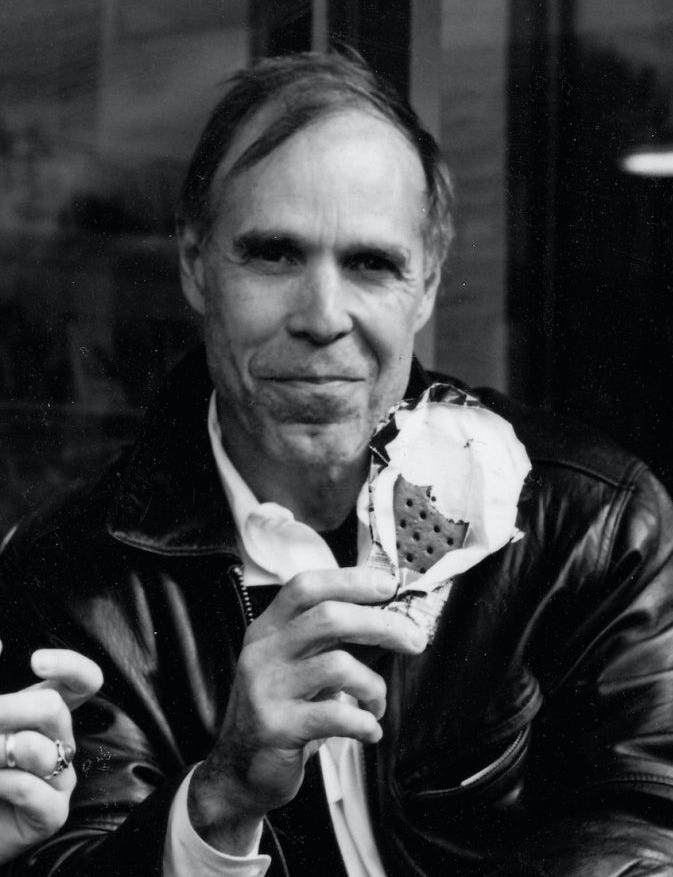
I have rarely read a publisher’s description of a book that isn’t a mishmash of beautifully written unintelligible mumbo jumbo.
Not so with Aerosmith Press, whose editors write this about Bruce Smith’s disturbing and relevant new book, Hungry Ghosts.
“No tear gas in the writer, no tear gas in the reader,” writes Bruce Smith. One of America’s most lauded poets, Smith in his new collection plants one depth-charge after another as the poet offers a language capable of conveying the radical underpinnings of our uncertain times. In Buddhist cosmology, hungry ghosts are beings whose appetites can never be satisfied. In Smith’s poems we encounter a vision of a nation composed of individuals always longing for more: “I wanted more range, maybe, more bliss.” From Whitman and Dickinson to Rihanna and George Floyd, themes of societal and personal chaos lead to sudden moments of clarity. These haunting meditations, of ruptured narratives and bruised bodies, celebrate resilience, and call for transformation of both self and society. To read Smith is to be tempered, enlivened, moved and inspired.
As hyperbolic as this description may sound, there is so much more one could praise about Hungry Ghosts. What to say about a book that begins:
I turned my back on the color fields. I turned my back
on the abstract, New York, the blue / red adjustments
and the inflamed men, the men inflated with trust
and acts of god and gorgeous manly man drag.
I turned my back on the furious magazines [I could
read], their reds and blues and frequencies I used
[I could use] to spin myself into an ecstasy, white
dervish, in custody of a story that begins troubled
with power, then the trouble is you as you spin,
a dance that ends with vertigo, hard light, violence.
Whoof!
All of the poems, like this one, has Smith bearing witness to a time of moral, intellectual, and ethical crises, which, I’m sorry to say is OUR time. But unlike other “political” poetry—a kind of talk poetry where poets state their outrage with randomly right-justified line breaks—Smith’s poems are as stylistically challenging as they are disturbing. Smith has always been a jazzman, his language and rhythms very often like improvisational incantations. In a sense, his voice is very Homeric but with a touch of rap. If the written word ever gets completely crushed by technology and poems will need to be passed down word-of-mouth, Smith’s oeuvre will headline that canon.
Consider this poem, coincidentally titled “Homeric”:
Sang, suffered the singular
Misery limit, holy scheme, fever, fever crisis
Sacked that town, killed the men, seized the woman
as I was seized
Wept, cried, filled with tears
Something brilliant, shining [armor, eyes]
Held a lion, snake, wolf-self, boar, water
Burned thigh bones to the crisis
Sobbed, shed tears, cried, wept, witnessed
Ransacked, hurt, murdered, named by,
made by, ruined by the song
To me, the key word in this poem is “witnessed,” because all the power of this book is contained in it, because, as suggested before, Smith is a stand-in for us all, a lightning rod or magnet, attracting to him, as Charles Simic says all poets do, “complex historical, literary, and psychological forces,” while, at the same time, “maintaining oneself in the face of that multiplicity.” In Smith’s case, considering his subject matter, it’s a very painful experience for both him and the reader, but one worth participating in.
I think that when the dust settles, (and let’s hope it’s not nuclear dust) Hungry Ghost may end up being one of the most important book of poems for our times, and Smith is the only living American poet who could have written it. I hope the following poems encourage you to purchase it. For a terrific interview with Bruce, conducted by Chard deNiord, go to the literary journal PLUME Bruceinterview
I leave you with these three beauties from the book:
I dreamed I was speaking to the unmoved, the indifferent, the hostile,
even, wearers of tin foil hats and worse, zealots, believers in belief other
than mine, although how they came to Powell’s in Portland, Oregon
to buy my book and read it, I can’t understand, some need for blaspheme,
maybe. I had drawn a couple of cross-hatched and blurred lines
that in a certain Northwestern light looked like an insult to everything
dream readers held dear, so that later in the rainy empire outside
cars were overturned and set on fire and embassies were breached
and human beings beaten. No tear gas in the writer, no tear gas in the reader.
The dream is the truth of the lie of the scorn and wish of my tiny my-ness.
I was white for eight hours, off white for six, ate white,
narcoleptic slept through the din of the 19th century, the 20th
dreamt I cut that body down, woke up, breathed all the white air
I could, full of guilty sweetness in the rain which darkens everything,
which is another country yet the same country saturated
in gloss and gravity and shadow. I rectified and clarified.
I classified and banked. I remembered then forgot what it was,
a white feeling I could not name, nothing in my mouth
but a pink, bitten tongue, that either kept silent or white
lied. White’s paper or heroin or a make-shift grave-marker.
Language, my little boat, punctuated from within by Anglo-Saxons
and Romans and Greeks, my mouthful of ocean, my spell for harms
and cures. My bass, alto, soprano vowels, my master’s concrete
shoes. Bothered by trade wars and god storms. It is enchained,
enchanted, burdened like music. It is raced and gendered. It walks
into a bar and the bartender says why the alternative to silence?
All my white life it has been grass or winged things, lungs and lips.
It has been the groove and break and the freight. All my white life
it has been currency, memory. I used it for power and for love.
I made screeching sounds to those who would be beseeched.
You can find Peter Johnson’s books, along with interviews with him, appearances, and other information at peterjohnsonauthor.com
His most recent book of prose poems is While the Undertaker Sleeps: Collected and New Prose Poems
His most recent book of fiction is Shot: A Novel in Stories
Find out why he is giving away his new book of prose poem/fragments, even though he has a publisher for it, by downloading the PDF from the below link or going to OLD MAN’S homepage. His “Note to the Reader” and “Introduction” at the beginning of the PDF explains it all: Observations from the Edge of the Abyss
Agreed, Syd.
This is a spot on take, Peter. Thanks.